Work/Packaging · Sustainability · Pratt Institute
Compostables
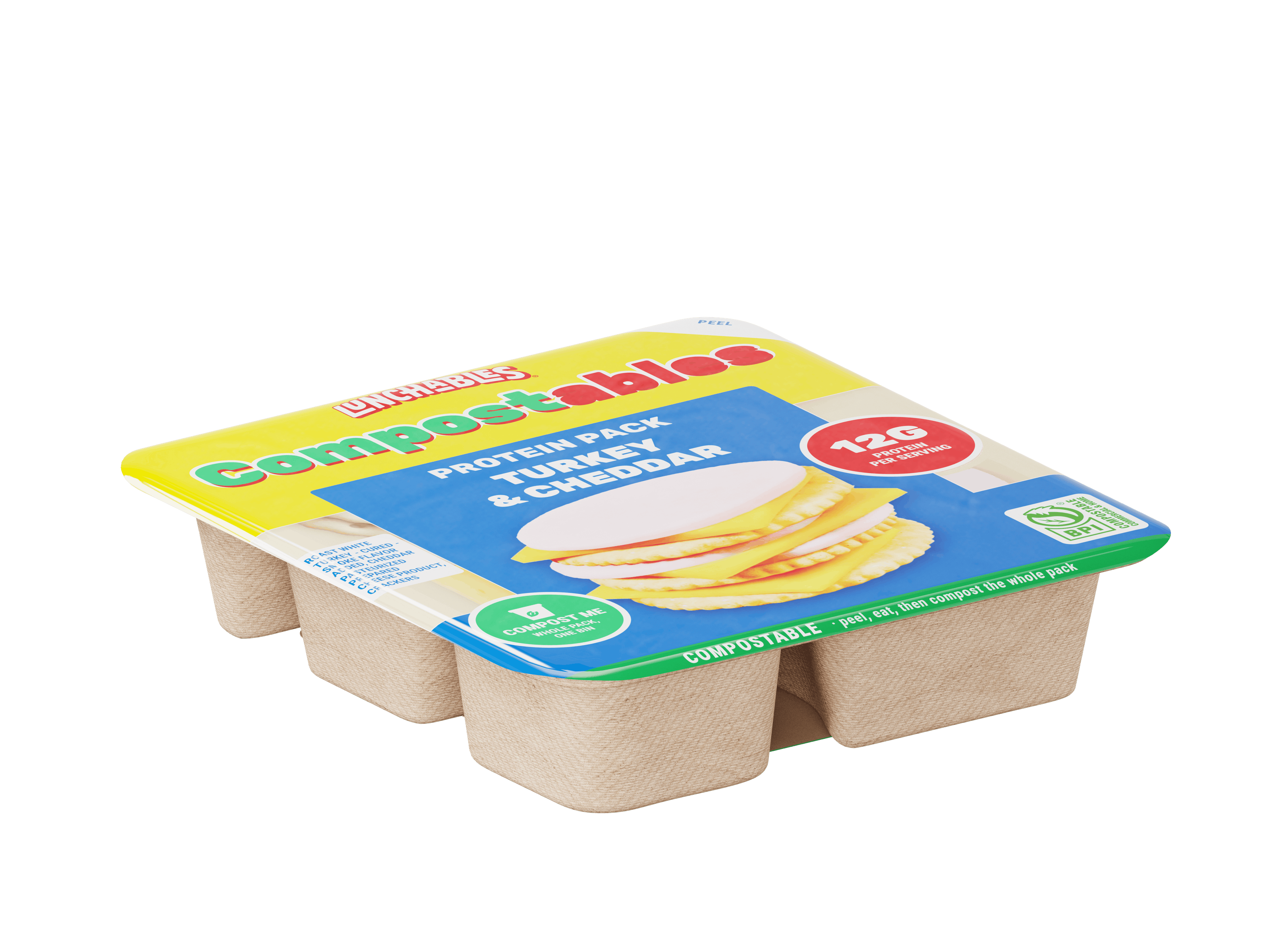
A plastic-free Lunchables designed to end up in the compost bin, not the trash: a seaweed-coated fiber tray, a cellulose lid, and one bin for everything.
The problem
A best-selling kit built from plastic that rarely gets recycled
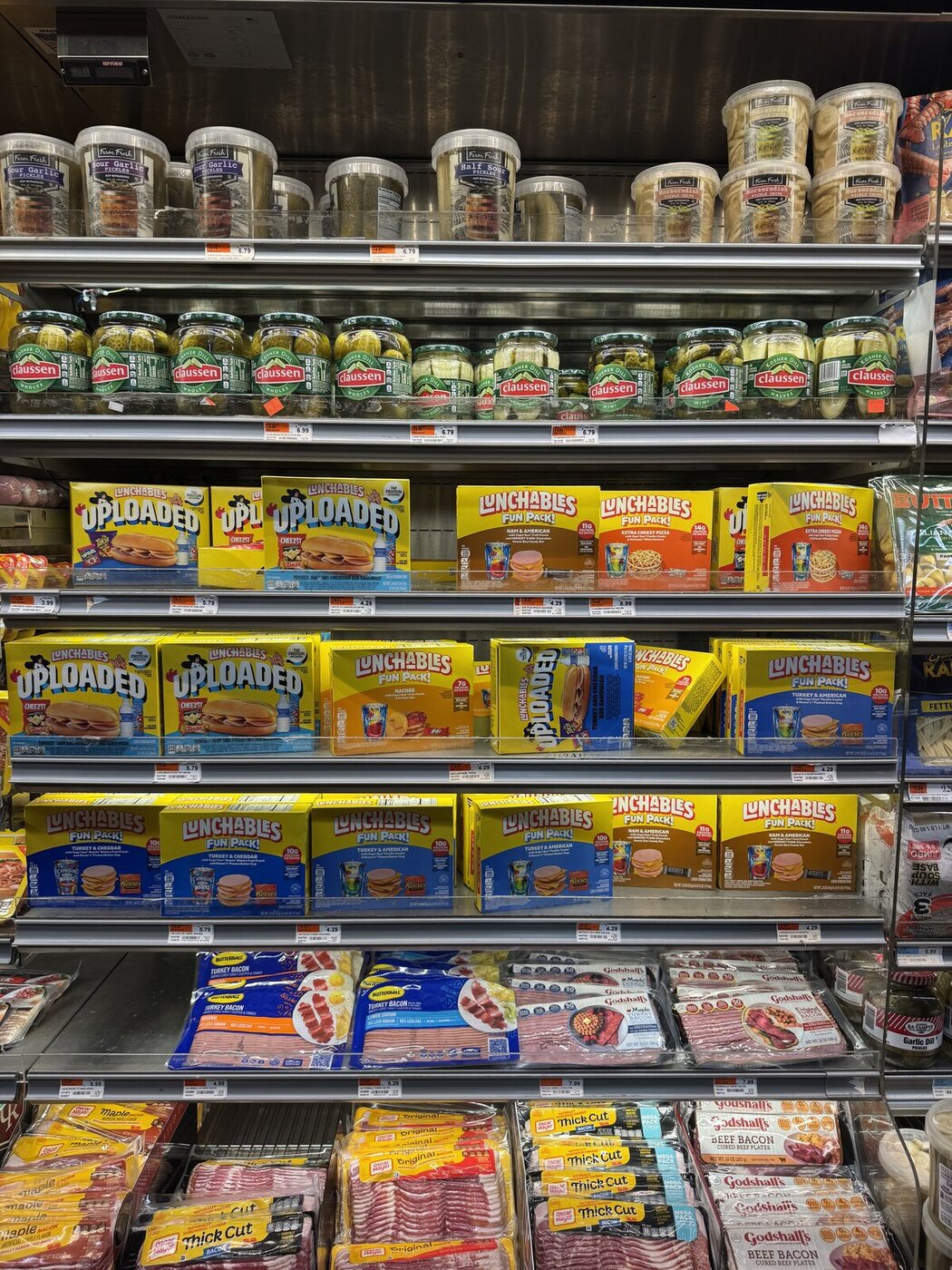
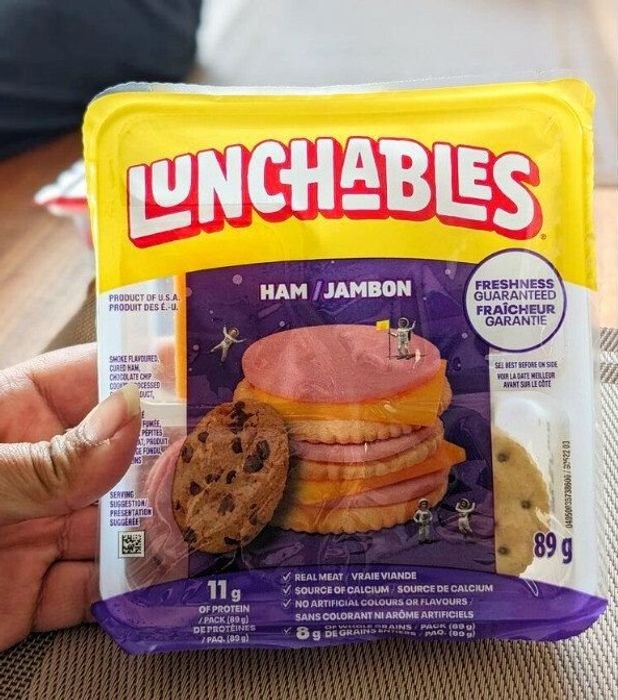
Lunchables is grab-and-go and kids love it, but every kit is a #7 plastic tray and printed film that curbside recycling won’t take. It gets eaten in minutes and thrown away.
$1.36B
Sales in one year
Each sale is a single-use kit (2018)
Mail-in
The only tray recycling route
Via TerraCycle; curbside doesn’t take it
9%
Of plastic waste recycled
Worldwide (OECD, 2022)
Lead
And high sodium
Found in tested kits (Consumer Reports, 2024)

Research
Taking a kit apart
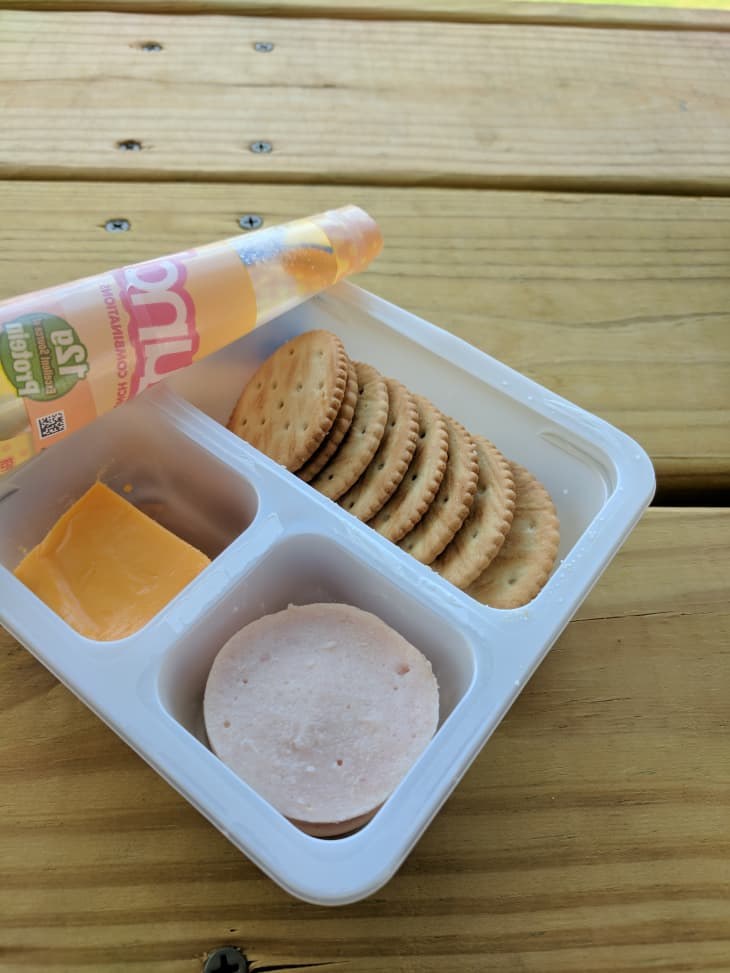
Following the Circular Design Guide’s Insides Out method, we bought a kit, took it apart, and weighed every part on a kitchen scale: a 10 g tray, a 1.42 g lid film, and 136.6 g of food. Those numbers became our life cycle inventory.
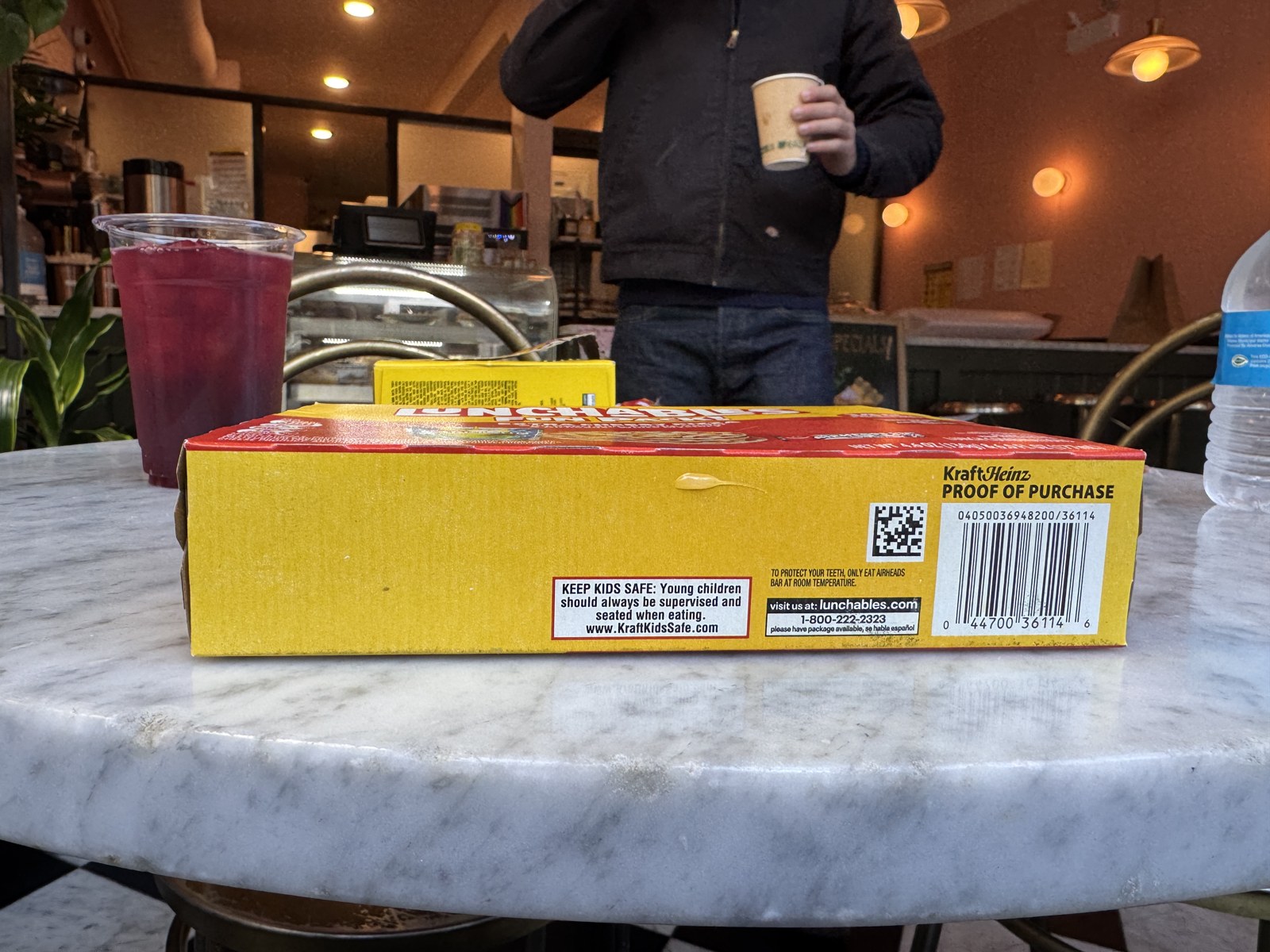


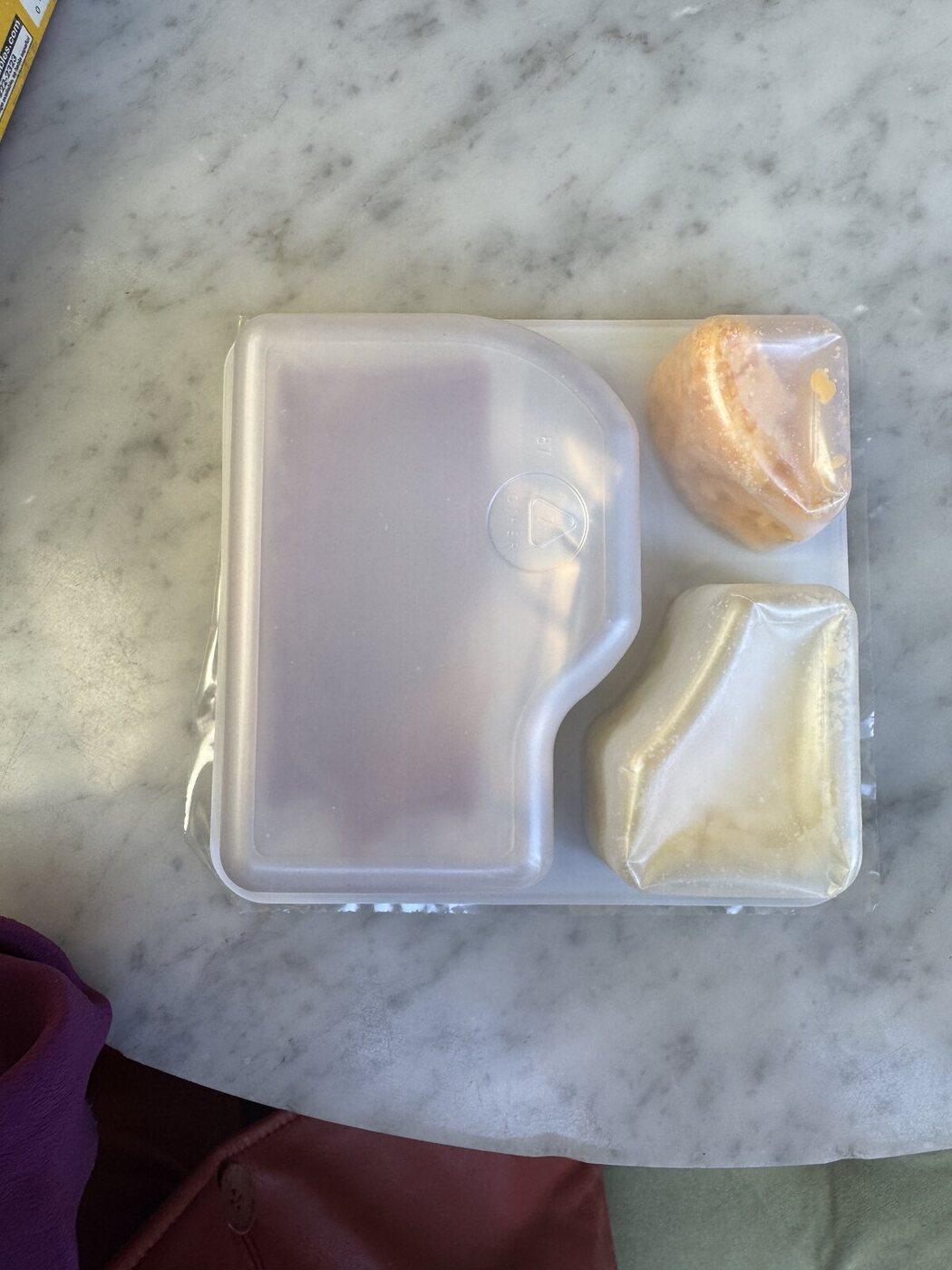
Lunch kits today, and why they fall short
Lunchables (today)
Sealed and fridge-stable, but a single-use plastic tray and film thrown away after one lunch.
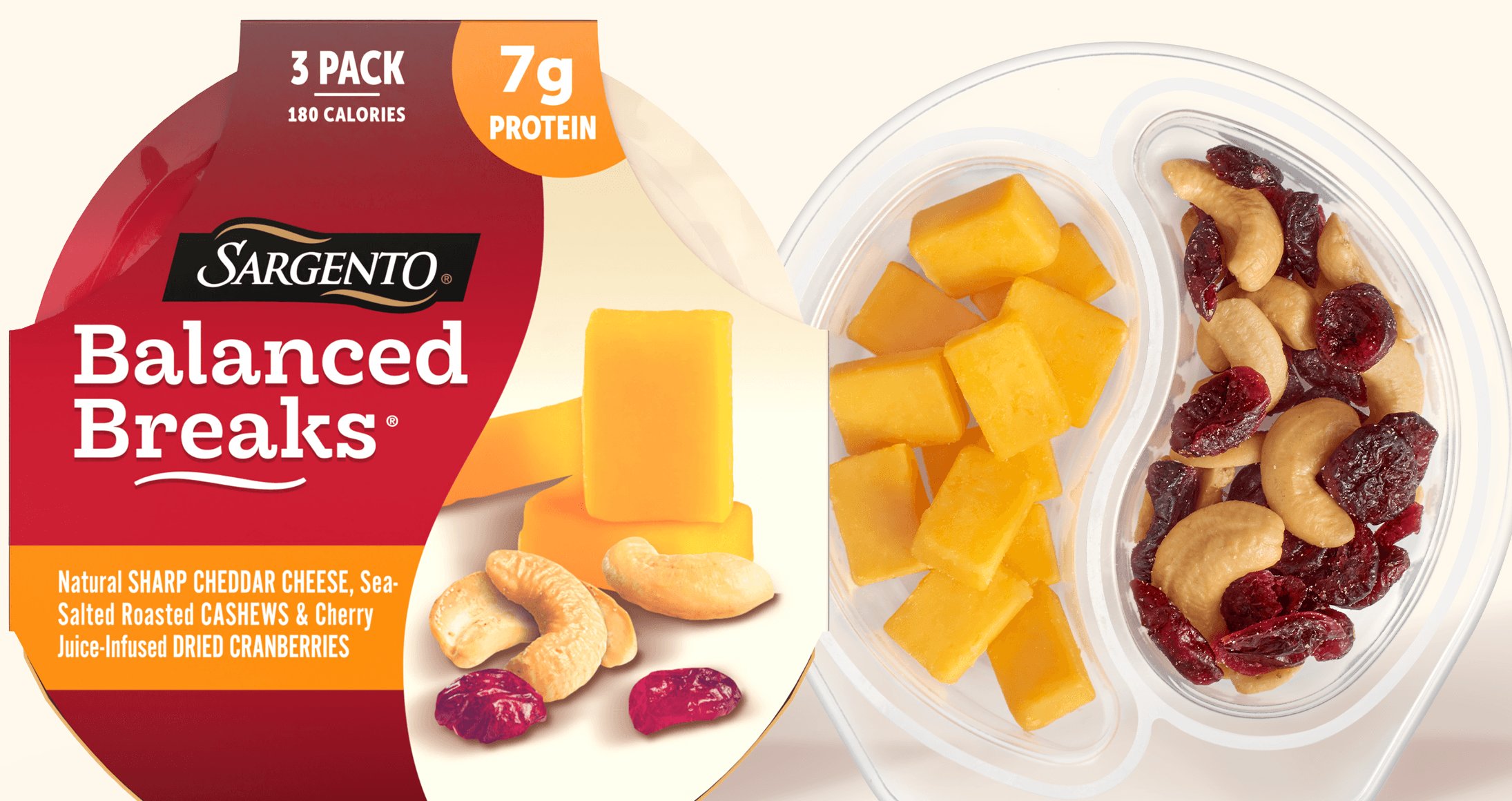
Snack and protein packs
Shelf-ready and portioned, but the same single-use format in hard-to-recycle #7 plastic.
Reusable plastic bento
Dishwasher safe with kid-friendly compartments, but still plastic, and parents pack it every day.
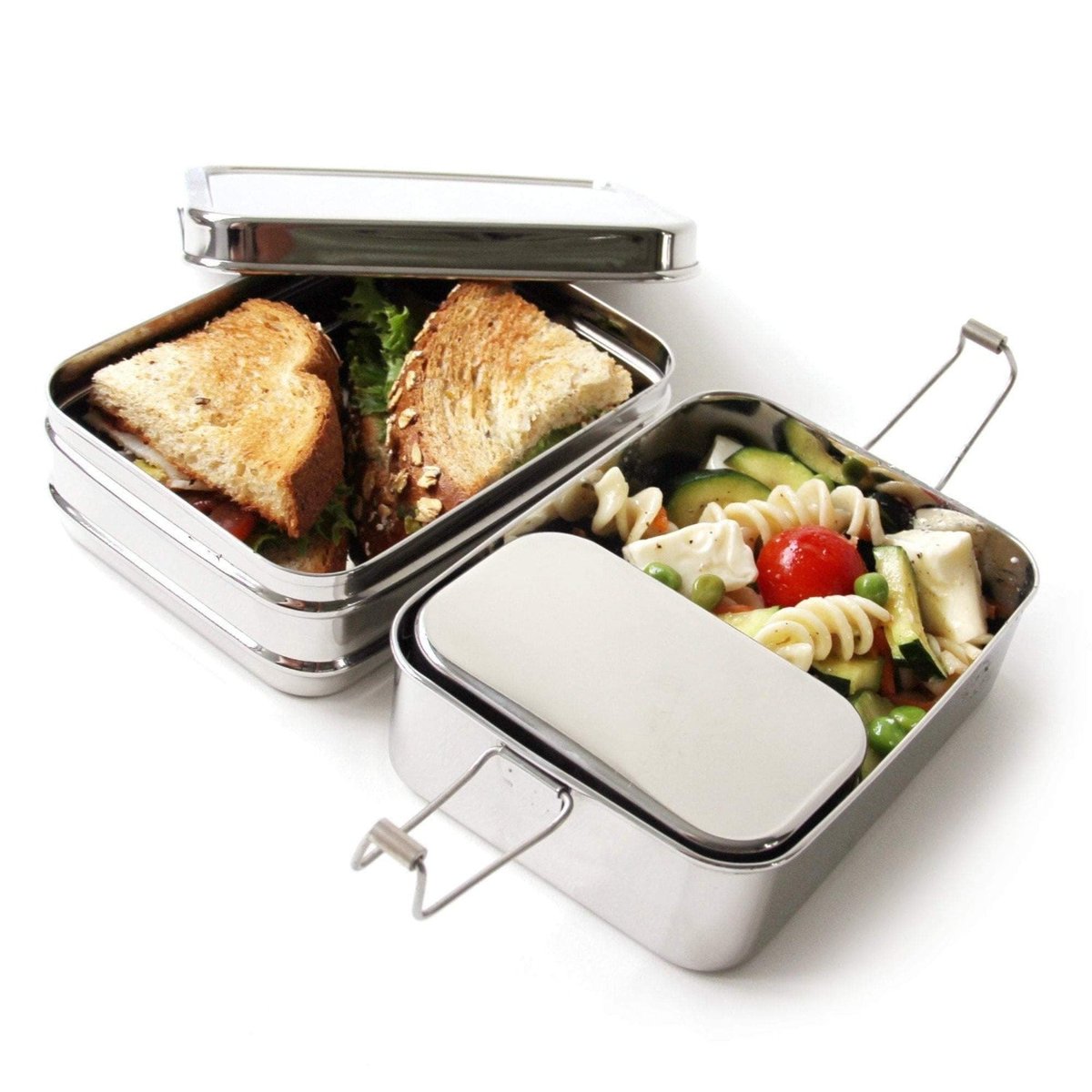
Stainless steel bento
Plastic-free and lasts for years, but it’s not grab-and-go.

The gap
No ready-made, grab-and-go kit is both plastic-free and compostable. Reusables solve waste but lose the convenience parents buy Lunchables for.
The solution
The same grab-and-go kit, made to go in the compost bin
Kids open, eat, and throw away their lunch the same way they do today. We don’t ask them to change. We change what the pack is made of and which bin it goes in.
The user: kids, about 6–12
They want a fun lunch they build themselves. In reality they open, eat, and toss in seconds; they won’t sort or rinse. Design for a lid that peels off easily, and every piece in one bin.
The buyer: parents
They want a quick lunch their kid will actually eat, and worry about plastic waste and what’s in the food. Design for the same convenience, without the plastic guilt.
Five design criteria
No conventional plastic
Tray, lid film, and labels.
All in one compost bin
Nothing has to be separated or rinsed.
Airtight and food-safe
Keeps meat and cheese safe to the use-by date.
Kid-friendly
A six-year-old can open it without help.
Less waste we can measure
Grams kept out of landfill per kit, per year.
Name and identity
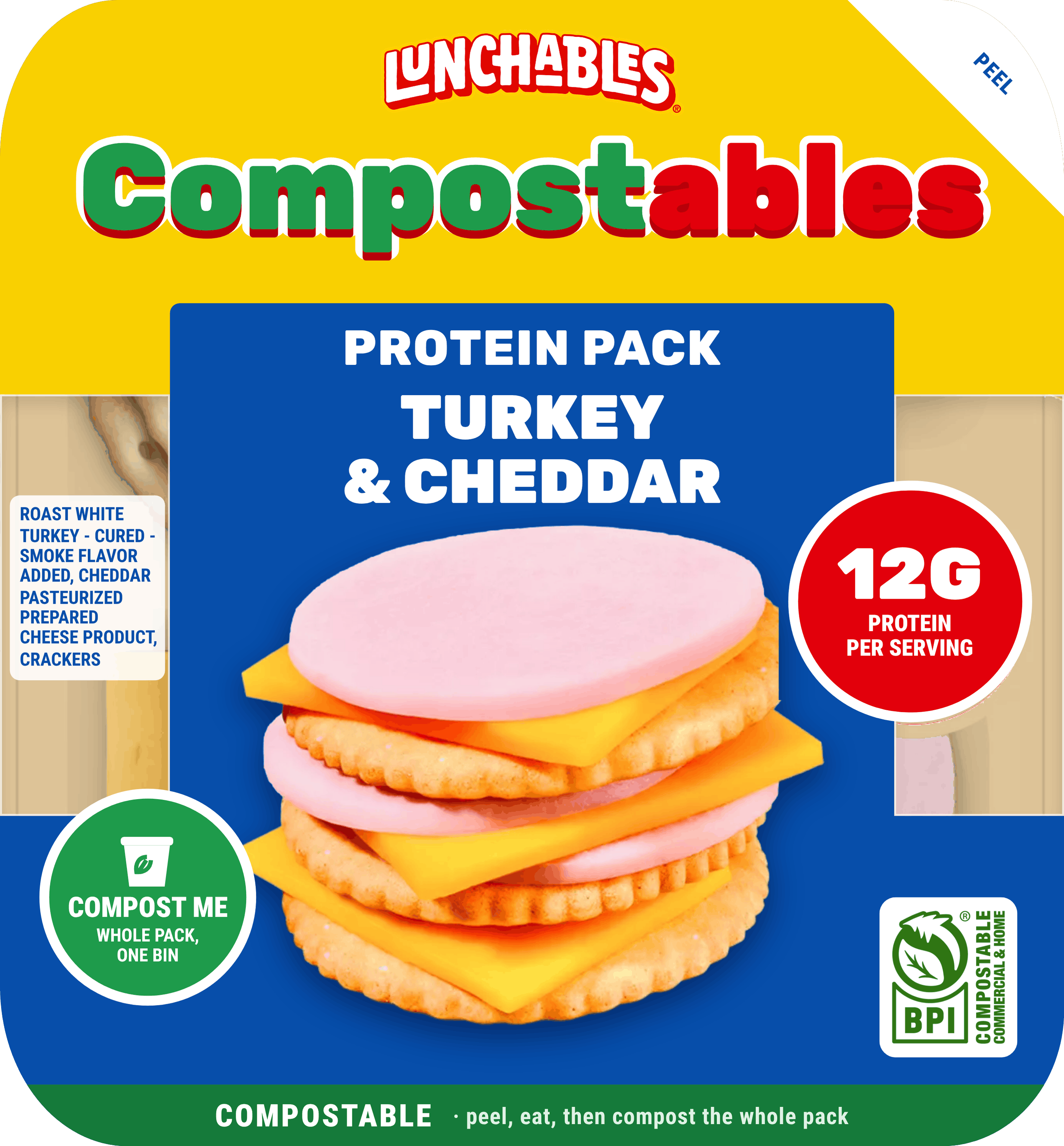
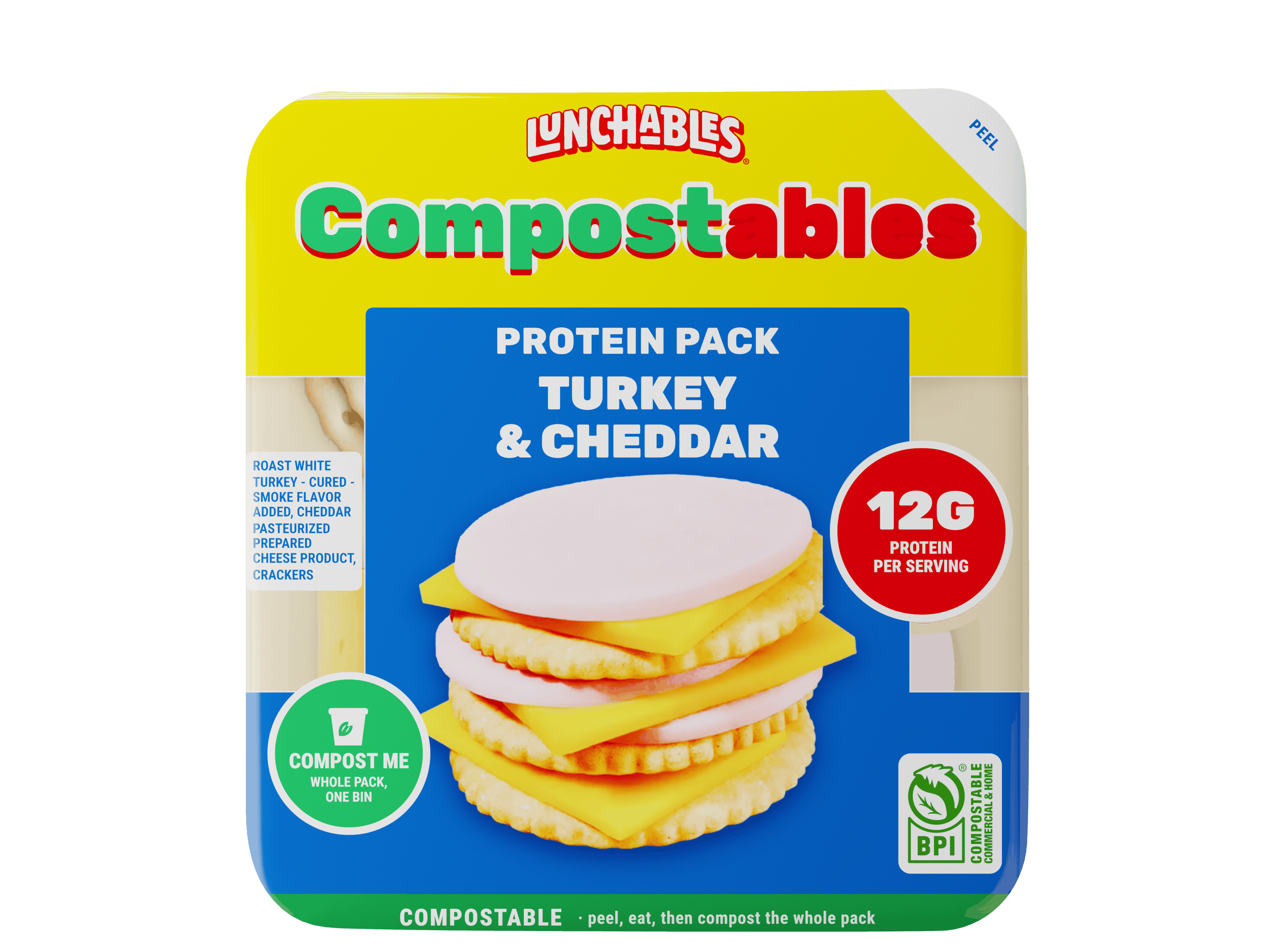
Compostables is a play on Lunchables: the same kit kids already know, now made to be composted. The tagline is “Lunch today. Soil tomorrow.”
The pack keeps Lunchables’ own red, yellow, and blue, set in Rubik Black and DM Sans, and adds one new color: compost green, used only for what goes in the bin.
Process
Where the kit goes, and where it can go wrong
We mapped the kit’s full path, from the factory to an NYC fridge to the compost bin, and followed a kid from fridge to lunch to bin to find the moments the design has to get right.

1
Store fridge
Shipped and kept cold

2
Home fridge
Days to weeks until lunch

3
Backpack
Hours out of the fridge

4
Lunch
Cafeteria, home, or park

5
Peel and eat
A kid opens it alone

6
Dispose
Seconds, by habit

7
Compost
Back to soil in weeks to months
Risk at 1–3
Meat and cheese spoil if the seal leaks or the kit warms up. Design: an airtight seal.
Risk at 5
A film that won’t peel ends up torn or wasted. Design: a big peel tab.
Risk at 6
Kids toss everything in the trash by habit. Design: a one-bin kit and bin cues.
The design
Three parts, no plastic, one compost bin
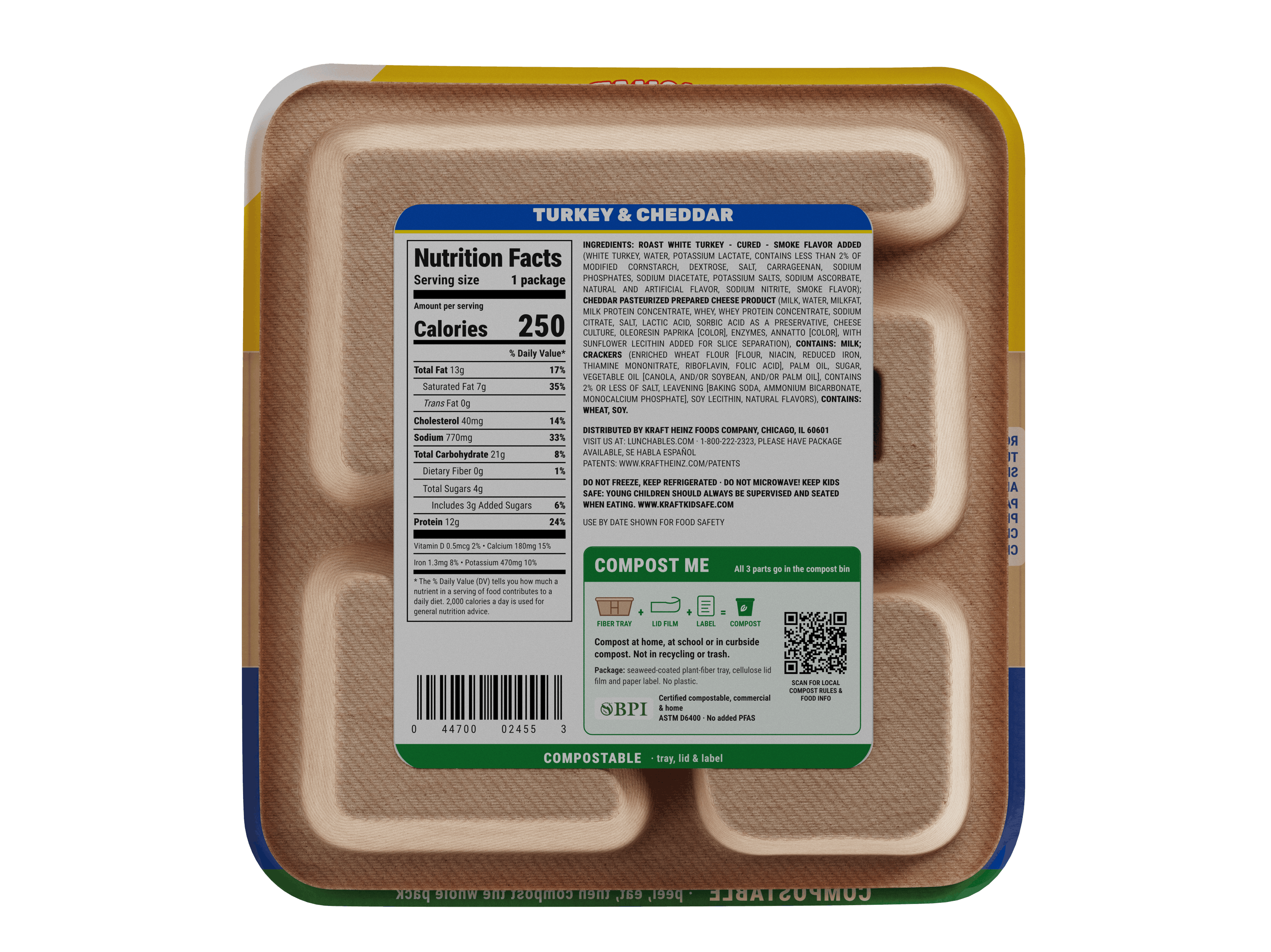
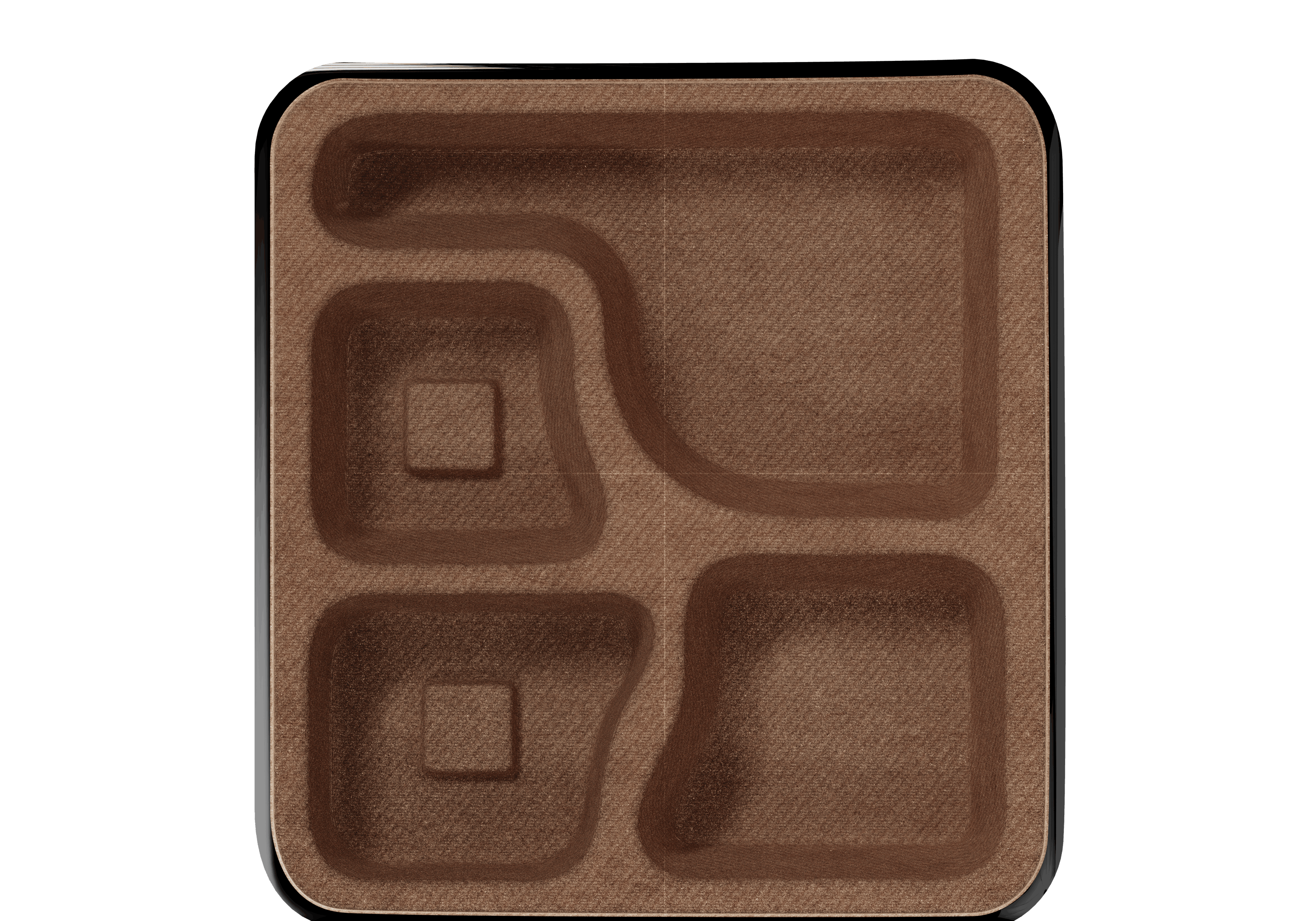
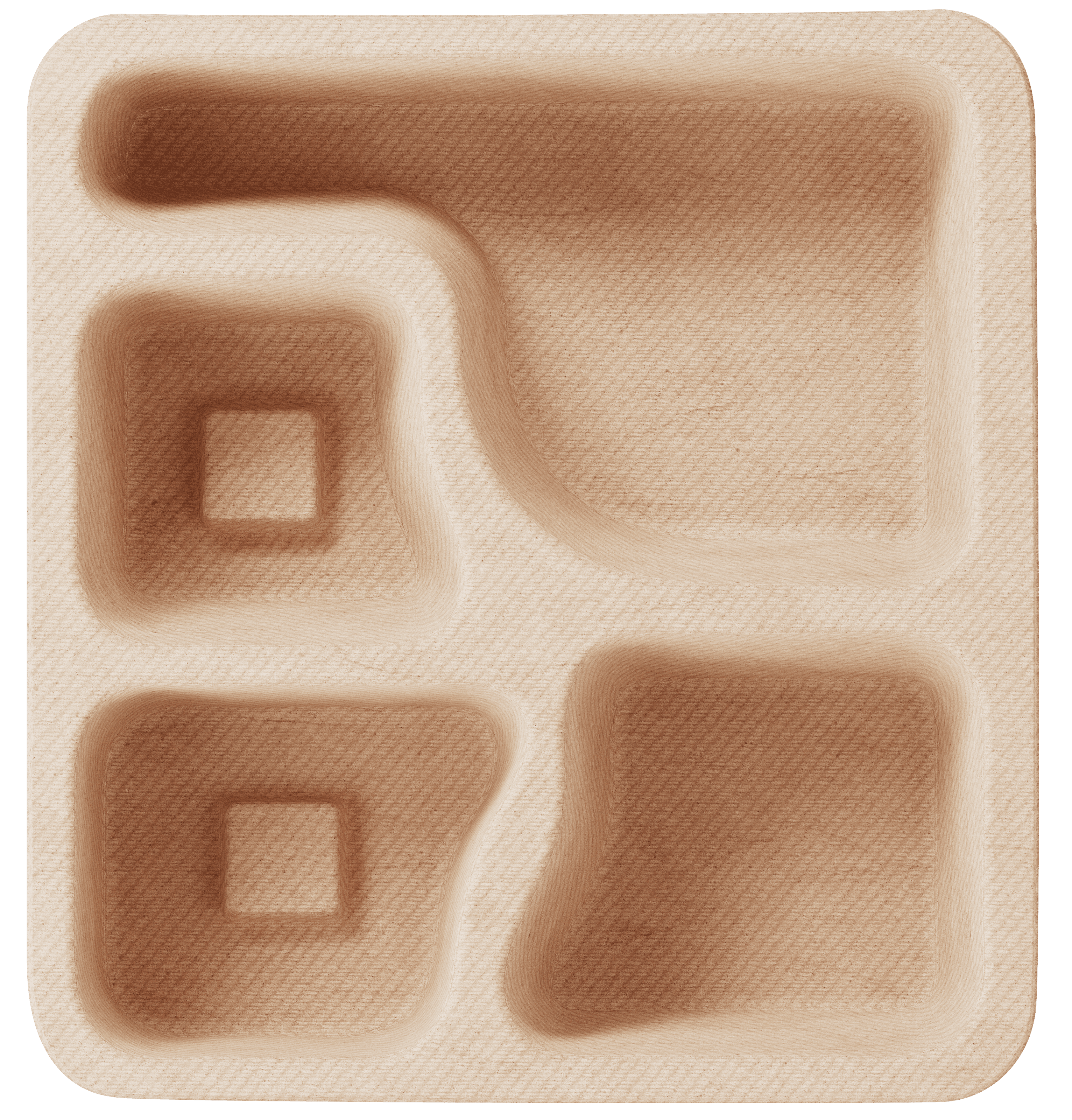
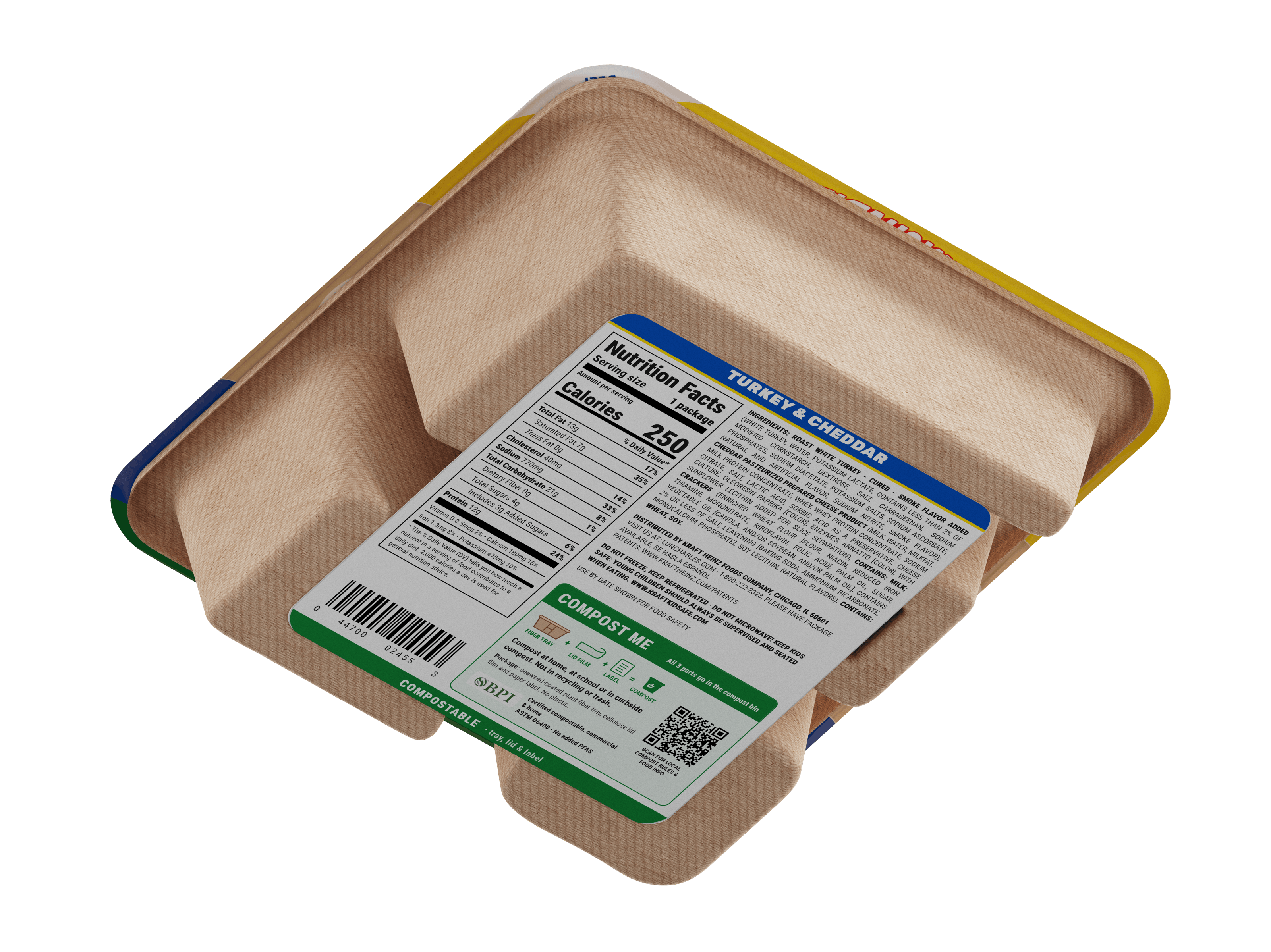
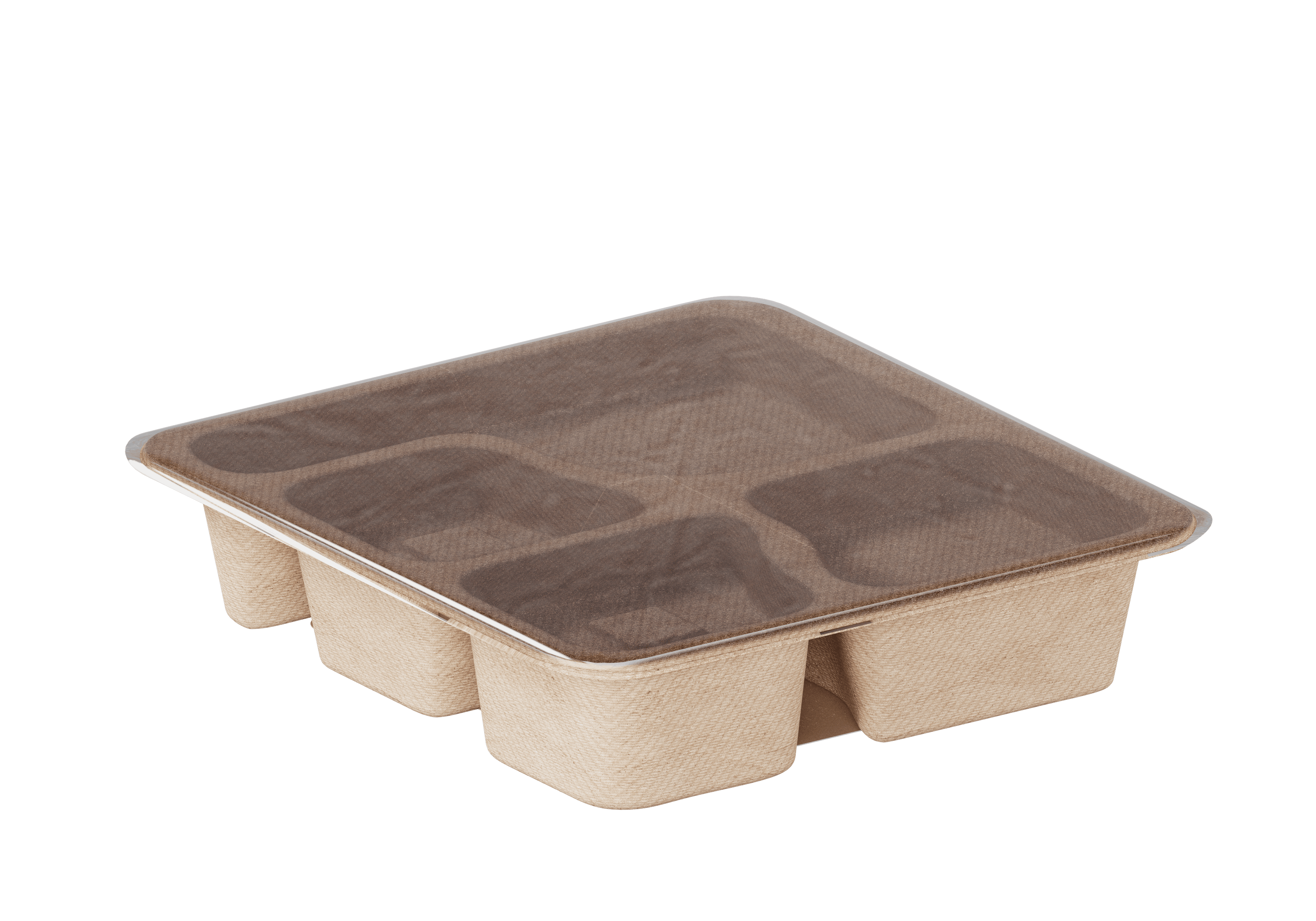
We modeled the tray, compartments, and peel seal in Rhino and iterated on the renders. The printed lid doubles as the front label, and the film stays hinged to the tray so nothing gets separated.
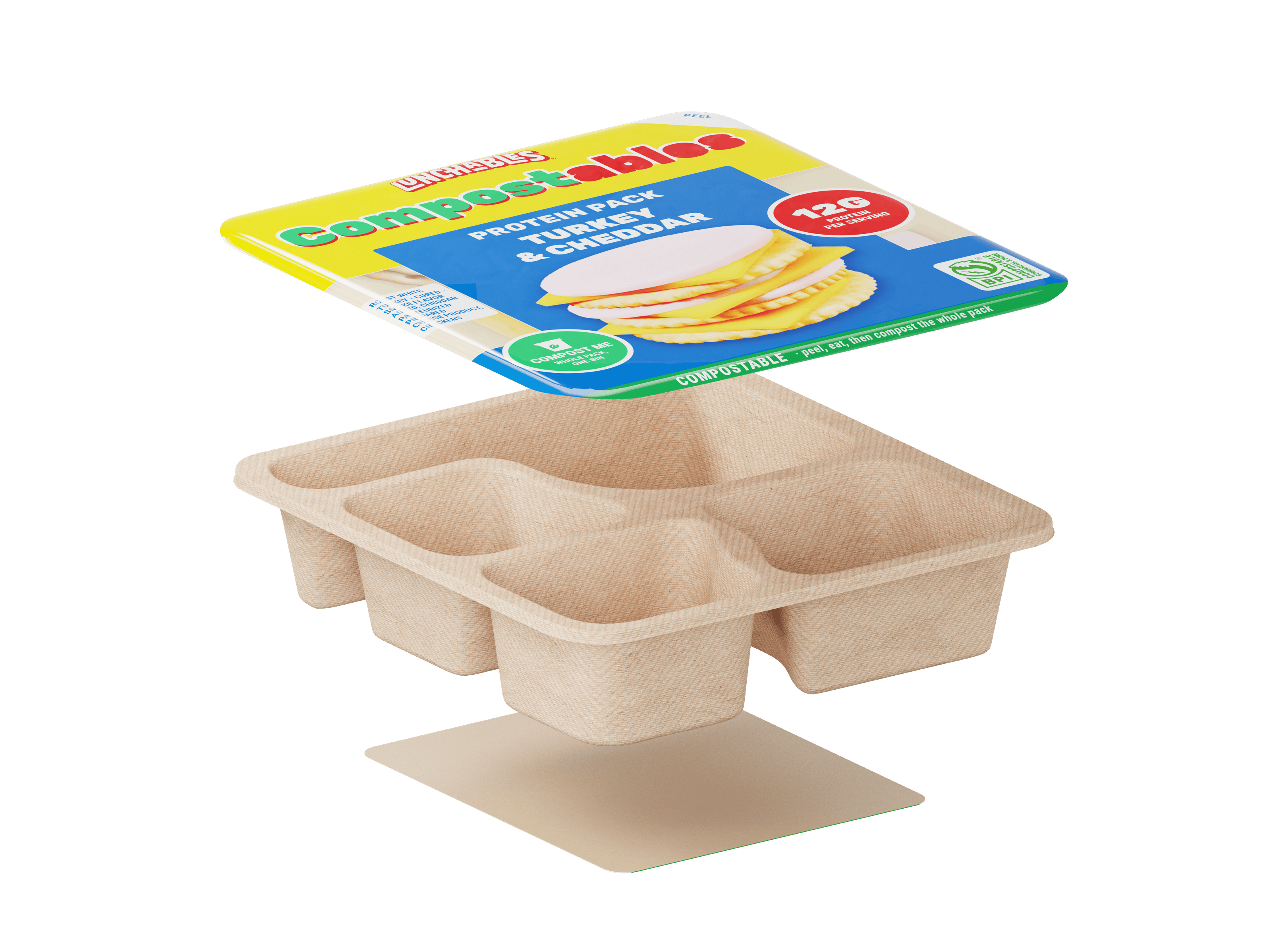
1 · Lid film
NatureFlex compostable cellulose, heat-sealed to the rim. Still to prove: that it stays airtight in the fridge until the use-by date.
2 · Fiber tray
Seaweed-coated fiber (Notpla) with four molded compartments. Still to prove: that it stays strong with moist, chilled food for its whole shelf life.
3 · Back label
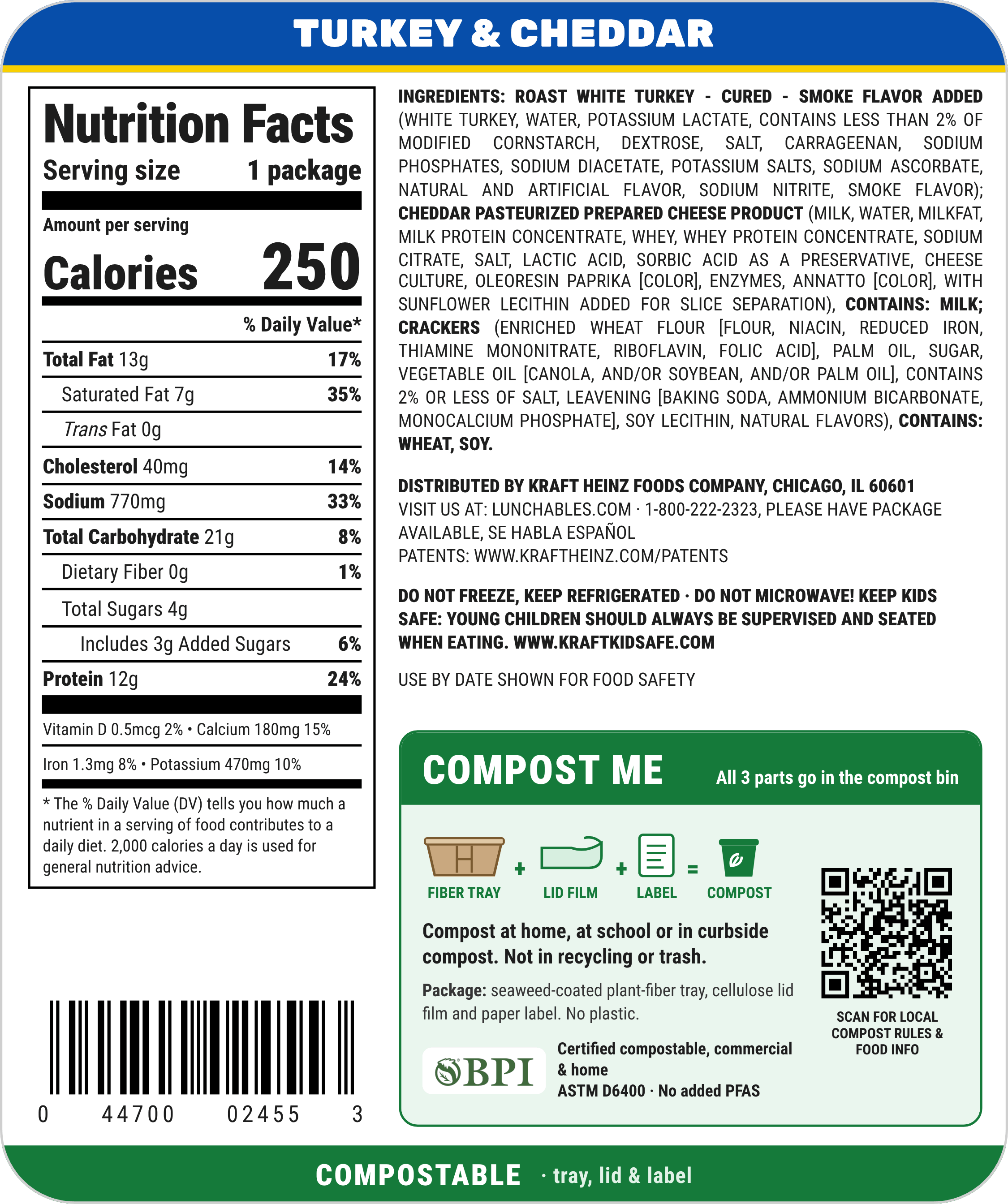
Paper, with nutrition facts and the compost cue. Still to prove: that the ink and glue break down in compost too.
Materials
The tray that fits both school and home compost
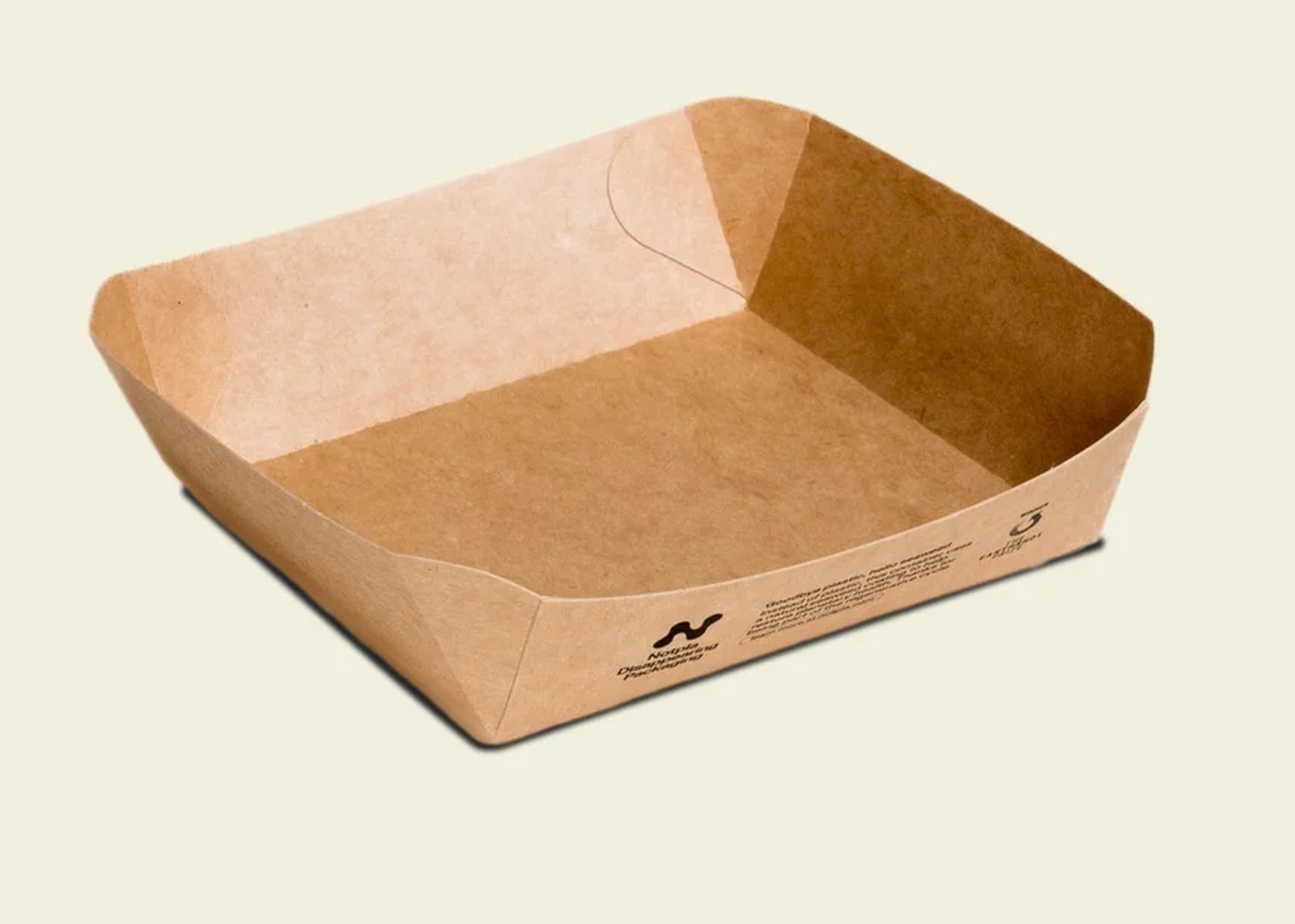
We compared a bagasse tray from World Centric with Notpla’s seaweed-coated kraft board. Both are PFAS-free and cost about the same per tray, but bagasse only breaks down in commercial composting.
Kids eat at school and at home, and Notpla is the one tray made for both bins. Its trade-offs are a custom molded order for four compartments, and shipping from the U.K.
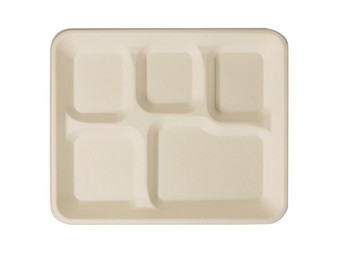
Bagasse (World Centric)
Unbleached plant-fiber pulp. Commercial composting only. Five compartments, but 10.5 × 8.5 in is too big. $0.17 a tray from U.S. distributors.
Notpla (chosen)
FSC kraft board with a seaweed coating. Home (Notpla’s claim) and BPI-certified commercial composting. About $0.18 a tray before shipping from the U.K.
The chilled seal: our biggest risk
Meat and cheese need a lid that is airtight around every cell, blocks oxygen and moisture, peels for a six-year-old, and composts with the tray. We compared four lidding options and flagged the tests still needed.
NatureFlex 55HK1
Marketed as home-compostable lidding and already seals compostable school-meal trays. The meat barrier and seal to the seaweed coating are unconfirmed.
Corapack + NatureFlex
A high-barrier lid already proven on pulp trays, but its bio-based sealant isn’t always plastic-free.
TIPA lidding laminate
Easy-peel and certified compostable, but partly fossil-based and built for produce.
Notpla SeaView lid
A plastic-free clear window, but not airtight and made for a different box.
Tests still needed
1. Request film samples. 2. Heat-seal to the tray flange. 3. Fridge test against the current use-by date. 4. Peel test with kids.
End of life
Making the right bin the easy choice
Only about 5% of U.S. food waste is composted, and 56% of curbside programs surveyed don’t accept compostable packaging. So the label is designed to the strictest rules, Washington and California, and a QR code points to local rules and the nearest drop-off.
School cafeteria
NYC composts in every cafeteria, but many U.S. schools have no pickup. We add a bright “Compost me” cue kids can spot at the bin.
Home
Curbside food-scrap pickup where it exists, a backyard bin where it doesn’t. We add “Compost me” on the label and a QR code to local rules.
Park or on the go
Usually no compost bin nearby, so this is where the kit most likely ends up in the trash. The QR code points to the nearest public drop-off.
Impact
What switching would change
We ran a cradle-to-grave life cycle assessment in Sustainable Minds for one kid’s school year of lunches, 180 kits. Swapping plastic for fiber cuts manufacturing emissions by 39%.
The red flag is shipping empty trays and lids from the U.K., the one stage that gets worse. If Kraft Heinz made them in-house in Avon, NY, as it does its plastic trays, the cut grows to 32% less CO₂e.
−30%
Greenhouse gases
5.6 vs. 8.0 kg CO₂e a school year
−16%
Overall impact score
Sustainable Minds single score
−69%
Fossil fuel use
No oil-based plastic in the tray or lid
0 g
Plastic to landfill
Down from 2.06 kg per kid a year
6,200 t
Plastic kept out of landfills
A year, at 2018 sales (about 544 million kits)
7,100 t
Less CO₂e
A year, from the packaging alone
The campaign
That’s the Lunchables effect. Now it grows.
Kids already know “That’s the Lunchables effect.” The campaign keeps the brand’s biggest asset and gives it a sustainable twist: kids cheer when the kit comes out, and cheer again when it goes in the compost.
It borrows Lunchables’ own cafeteria energy, bouncy type, and bright red and yellow, then adds compost green and kraft brown for the ending: the bin, the soil, the sprout.
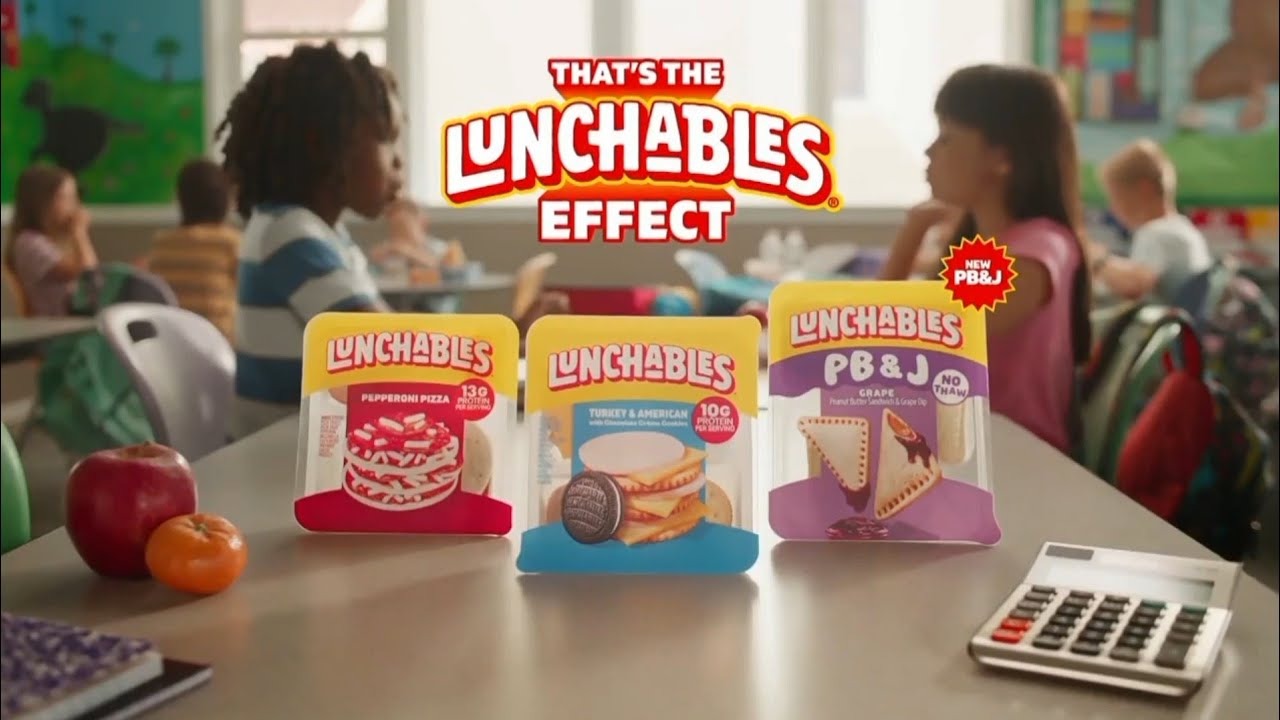

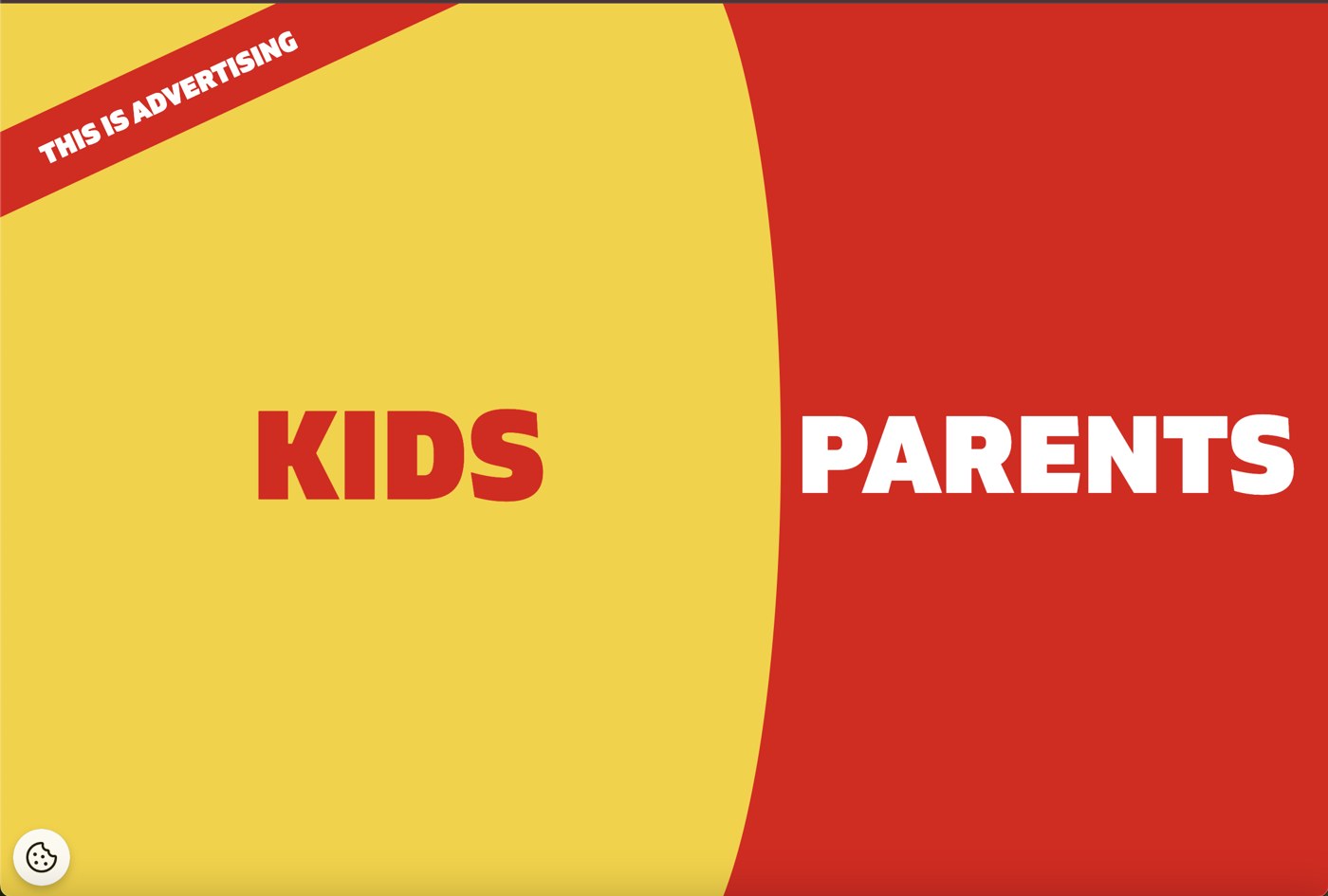
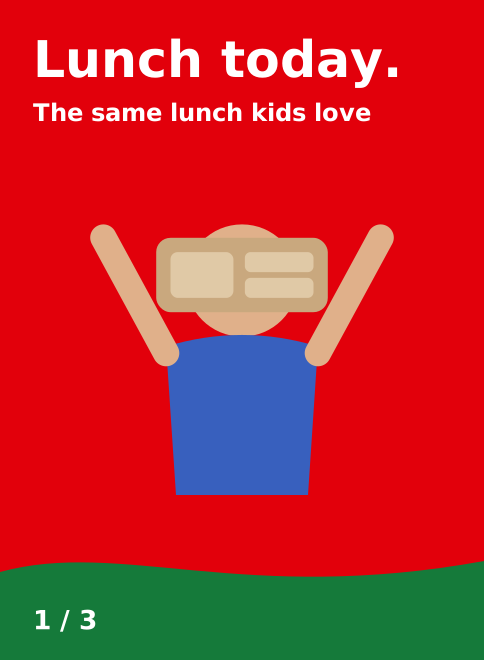
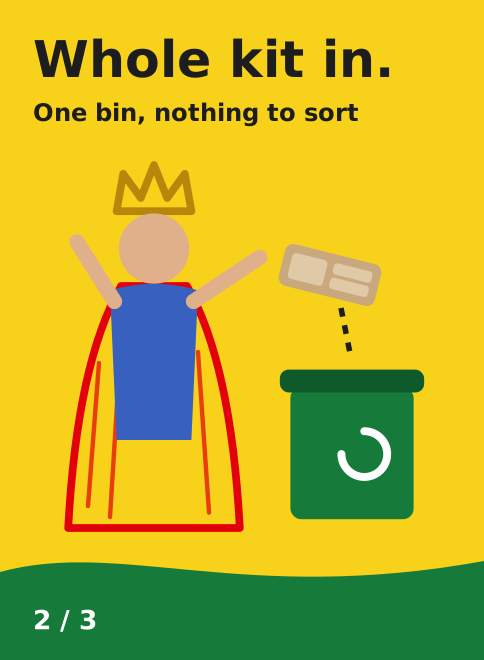
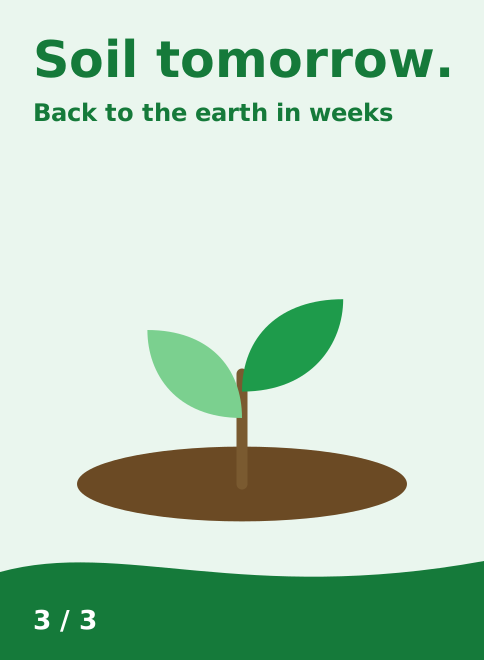
Three posters, one sentence: lunch, bin, soil
“The Lunchables effect, part 2”: a 30-second spot

0–6 s
Friends lean in as a kid opens the new kit.

6–12 s
“That’s the Lunchables effect!” Everyone cheers.

12–18 s
He bins the whole kit. A crayon crown and cape appear.

18–25 s
Time-lapse: compost, then a sprout in the school garden.

25–30 s
End card: “That’s the Lunchables effect. Now it grows.”
The Lunchables Compost Cup
Most kits are eaten in cafeterias, so the campaign puts the message into action where kids throw lunch away. Like Box Tops for Education, families already understand it: buy the product, help your school win. Counting kits also tells us how many really get composted.
Schools sign up
Any school, PTA, or district joins online.
We bring the bins
Schools without composting get free bins.
Kids compost all year
Every empty kit goes in the green bin.
County leaderboard
Bins are counted each month.
The winner
Most composted kits per student wins a prize.
Buy the new Compostables. Then put the whole kit in the compost.
The one ask
For kids, parents, and schools